
Matthew Logan | May 30, 2020
The NBA has long been revered as one of the most successful entertainment businesses in the United States and throughout the world. The league boasts innumerable destinations of basketball expansion around the globe, optimal player salaries and operations, and a generated revenue of up to $8 billion per year. The organization also holds the title of being the most diverse sports entity in America, where 80.7 percent of its players are people of color or different ethnicities. The league has managed to avoid most crippling social, ethical, athletic, and political issues that has somewhat easily found its way into its American counterparts, the NFL and MLB, within the last few decades.
However, it wasn’t until April of 2014, under Adam Silver’s first year as NBA Commissioner, that the NBA faced one of its most controversial, unlikely issues in the league’s 68 year history: Racism in professional basketball. The story of former NBA owner Donald Sterling is one that is shocking, mainly due to the fact that it took place in perhaps the most diverse sports organization in the world; the NBA.
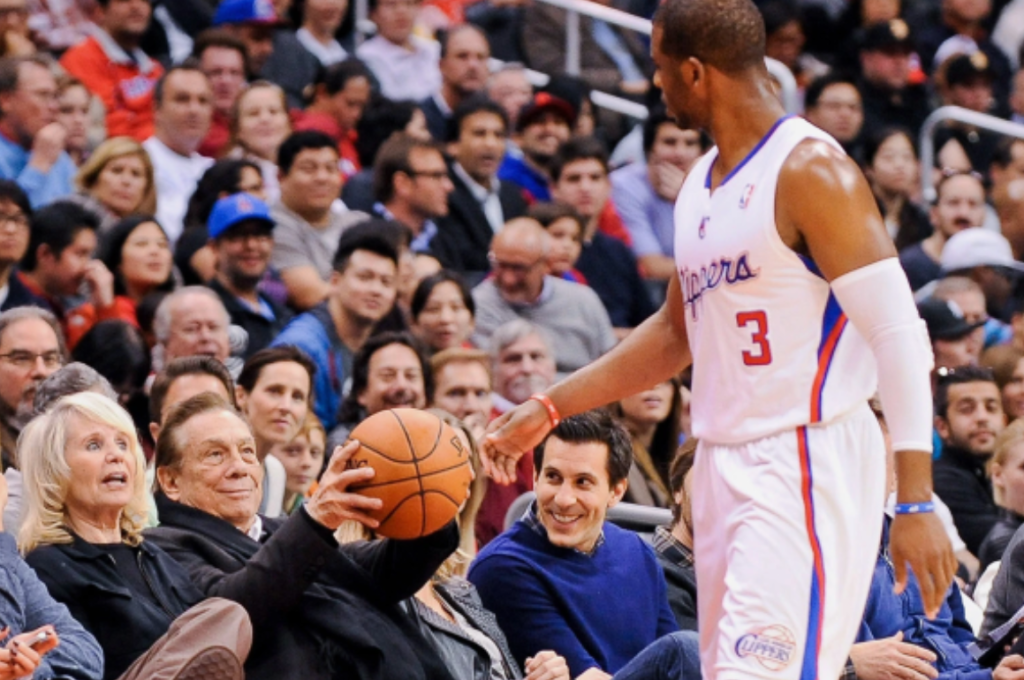
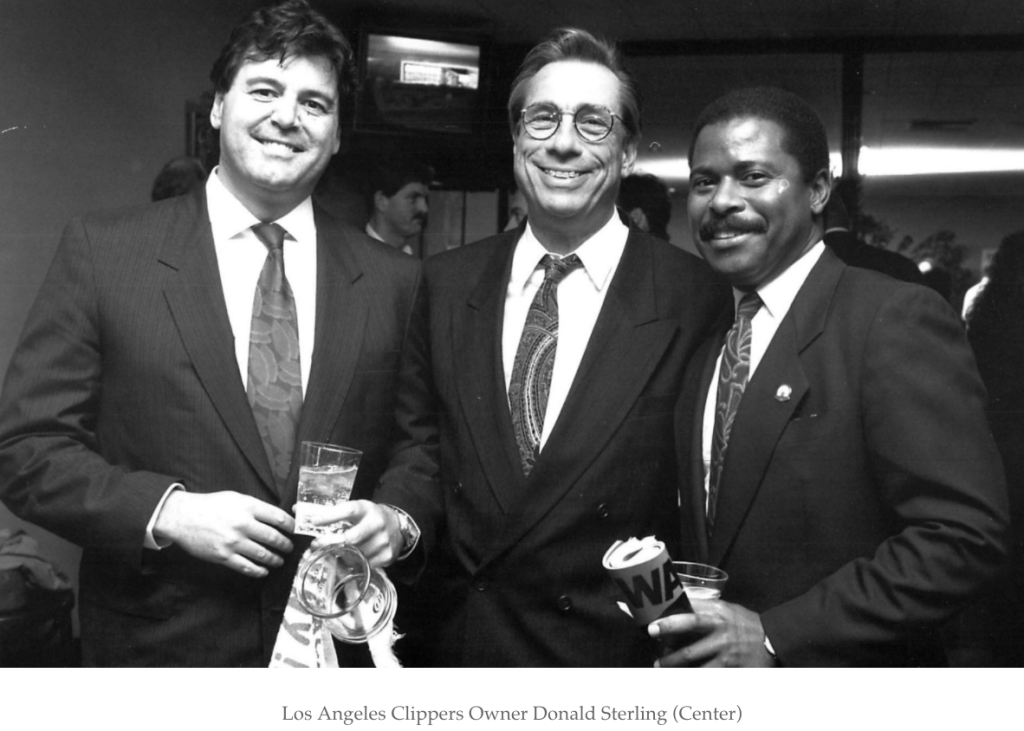
Before you witness this bizarre story unfold, it would be best to know the man behind it. Donald Sterling, born Donald Tokowitz in 1933 to polish immigrants, grew up in eastern Los Angeles. After attending Southwestern Law School in Los Angeles, he would later become a successful personal injury and divorce lawyer, as well as a prominent real estate mogul, amassing a Forbes estimated $1.9 billion.
Drowning in his wealth and looking to develop an iconic identity in the southern California region, he would purchase the San Diego Clippers in 1981 for $12.7 million. After eventually moving the team to Los Angeles three years later to become the second LA-based NBA franchise, his Clippers would share the city with its vastly more popular and successful rival, the Los Angeles Lakers. Sterling’s wife, Rochelle (Shelly) Sterling, became a co-owner of the franchise alongside him in 1983. As the owner of the Los Angeles Clippers, while married, Sterling would go through the exaggerated amount of hundreds of girlfriends vying for his affluence, which just happens to be the source of the drama that unfolded in the NBA in 2014.
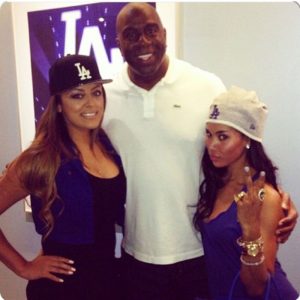
It all began on April 25, 2014, when TMZ (of course) released a video recording of Donald Sterling having a conversation with one of his mistresses, Vanessa Stiviano, where he made several disturbing, racist comments. Sterling was recorded saying, “It bothers me a lot that you want to broadcast that you’re associating with black people…I’m just saying, in your lousy fu***** Instagrams, you don’t have to have yourself with, walking with black people…You can sleep with them. You can bring them in, you can do whatever you want. The little I ask is not to promote it on that…And don’t bring him (Magic Johnson) to my games. Ok?” He frequently urged Stiviano to keep her relationships and interactions with black people private. When speaking about Magic Johnson, Sterling was referencing an Instagram photo that Stiviano posted where she was pictured with Magic Johnson and a friend. Sterling’s later explanation of his remarks stemmed from the fact that he felt jealous of Magic Johnson.
In an extended version of the tape recording which was released later, Sterling responds to Stiviano’s assertion that he owns a team of black players by saying, “I support them and give them food, and clothes, and cars, and houses. Who gives it to them? Does someone else give it to them? Who makes the game? Do I make the game, or do they make the game? Is there 30 owners, that created the league?” In saying this, Sterling was introducing the “plantation mentality” into basketball which has haunted the NFL for several years.
After Stiviano had recorded the entire conversation, she blackmailed Sterling on the threat of releasing the tape. Sterling, evidently, refused her blackmail and any of her demands, resulting in the tape being leaked out to TMZ, who released it to the public on the 25th of April. It wasn’t until the next day, on April 26, 2014, that the NBA world began reacting to the recording. NBA legends such as Magic Johnson and LeBron James condemned the words and actions of Sterling, alongside some of Sterling’s own players such as Clippers’ forward Blake Griffin and center DeAndre Jordan. Adam Silver officially began an NBA investigation into the matter, and stated that Sterling would be afforded due process.
Silver, who had assumed office only 2 months prior in February of 2014, had ran into his first, significant administrative dilemma of his young tenure. Most would say that it was in these course of events where Adam Silver the commissioner was born, as those in the sports and NBA communities began to finally judge Silver as an NBA Commissioner, not just the new guy in town.
This was important for Silver, for the NBA community, media and fans were not as accepting or enthused about his emergence as the NBA’s newest commissioner. The reason for this is most likely because of the overwhelming success and popularity of his predecessor, David Stern.
Stern, who spent 30 years as the commissioner of the NBA, saved the game from collapse in the early 80s and truly made the NBA what it is today; one of the greatest behemoths in all of sports. From international expansion and groundbreaking TV deals, to storied basketball rivals and championships, Stern built it all. On that NBA Mount Rushmore, his face is front and center. Thus, how could Silver compete? The only way he could ever match Stern is to carry on Stern’s successes and attempt to build upon his own. The Donald Sterling incident was our first instance of Commissioner Silver in action. It is without a doubt that Silver’s early reputation and first impression on the league would be defined on how he handled this shockingly bizarre situation. Clearly, no pressure.

However, this issue was much greater than simply seeing whether or not Adam Silver could earn his stripes as the league’s new, unproven commissioner. This issue was about racism and bigotry, two incredibly damaging and divisive facets of society that somehow entered the world’s most diverse game. It of course exposed issues that the NBA had not seen the likes of, and were not well equipped or prepared to take on. The reason for the league being ill-equipped to not completely prevent or solve this issue was because they didn’t believe they needed to, and why should they have? The NBA has dominated social media, society and pop-culture for decades. It was seen as the league that was always “with the times”, and could never forsee events such as those that occurred in April of 2014 transpiring, and I don’t blame them.
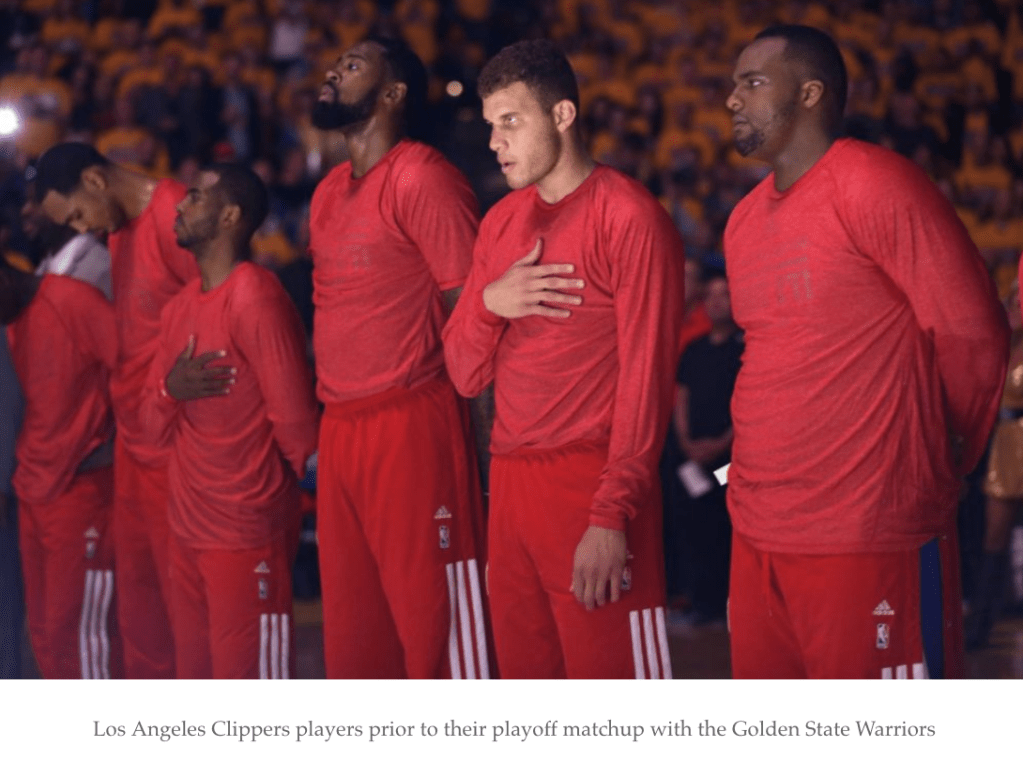
While regular comments from public figures and investigations ensued, the real drama began on April 28, 2014, when major sponsors began pulling away from the Clippers, including companies such as Kia, State Farm, Virgin America, Carmax, amongst others. The Clippers’ head coach, Doc Rivers, a longtime successful and renowned NBA coach, stated he was unsure he would even continue to coach the franchise if Sterling remained as the owner for the following season. Even Sterling’s players began protesting against him. As if the story wasn’t crazy enough, the NBA was in the midst of the 2013-2014 NBA playoffs. Sterling’s comments were released to the public while his team, the Los Angeles Clippers, were engaged in postseason play, playing against the Golden State Warriors in the first round of the Western Conference playoffs. During the first game since Sterling’s recording was made public, Clippers’ players protested against their owner, throwing their jerseys down on center court, and turning their warmup jackets and shirts inside-out so that their team name, “Clippers”, would not be displayed.
It wasn’t until April 29, 2014, that the NBA had concluded that the racist remarks on the tape recording were indeed made by Clippers owner Donald Sterling, concluding their investigation. Commissioner Adam Silver would announce that Sterling would receive a lifelong ban from the NBA, as well as pay a $2.5 million fine. Silver also stated that the team owners would move forward with a plan to remove the sitting owner and force him to sell the team for violation of the NBA’s constitutional by-laws. This landmark decision remains one of the most defining moments in NBA history, and of course Adam Silver’s tenure as commissioner.
In light of Sterling’s racist remarks, the NAACP (National American Alliance of Colored People) announced that its Los Angeles chapter would no longer bestow its 2014 Humanitarian Lifetime Achievement Award to the Clipper’s owner. Sterling and the NAACP reportedly maintained a 15-20 year relationship, in which Sterling provided the struggling organization with significant donations. These donations would often have strings attached, where in-turn Sterling would be included in prominent photo-ops and winning prestigious awards. After the organization’s questionable and crooked relationship with Sterling had been exposed, Leon Jenkins, president of the organization’s Los Angeles chapter, announced that the organization would return all of Sterling’s donations and later resigned his post as president. What most people couldn’t understand was why one of the nation’s oldest, most prominent civil rights organizations in America would bestow one of its most revered awards to a historically racist individual.

Based on Sterling’s remarks, it should come as no surprise to anyone that he had been historically racist throughout his real estate career and tenure as the owner of the Los Angeles Clippers.
In 2003, Sterling was accused of unfairly evicting minorities. A property supervisor gave sworn testimony that Sterling had said, “Blacks in this building, they smell, they’re not clean.” The case resulted in a private settlement in 2005.
In 2004, the Los Angeles Housing Rights Center sued Sterling for discriminatory rental practices. Sterling refused to do repairs and receive rent checks in an attempt to force out the Ardmore Apartments complex’s minorities. When a 66-year old, legally blind and partially paralyzed tenant named Kandynce Jones asked to be reimbursed for the damage caused by her flooded apartment, Sterling reportedly said, “Just evict the bitch.” The plaintiffs were awarded over $4.9 million for legal fees.
In 2006, the Department of Justice sued Sterling for refusing rent to African and Mexican Americans, reportedly saying, “Black tenants smell and attract vermin.” Sound familiar? Sterling settled for $2.73 million.
In 2009, Sterling settled for the largest residential rental lawsuit brought before the U.S. Department of Justice, settling for over $2.7 million.
Not only did Sterling exercise systemic racism in his real estate practices, but even through his own Clippers organization. Later in 2009, Sterling was sued by former Clippers General Manager and NBA Hall of Famer Elgin Baylor for wrongful termination on the basis of race and age. Baylor believed Sterling deliberately froze his salary at $350,000 up until his departure in 2008. In 2008, the average salary of an NBA general manager was $5.34 million. Baylor alleged Sterling had a “pervasive and ongoing racist attitude” when negotiating with African-American players, and even told Baylor that he wanted a team made up of, “Poor black boys from the south and a white head coach.” A jury ruled in favor of Sterling in 2011.
The fact that Sterling’s Clippers tenure not only lasted as long as it did, but received numerous civil rights awards amidst his blatant racist behavior and actions against minorities is unfathomable. It’s only greater proof of what money can do for any human being on this planet, no matter what, where, why, when and how.
After receiving a lifetime ban from the NBA, Sterling and his wife, who was co-owner of the team at the time, engaged in a legal battle over the future of the franchise. Sterling’s wife, Shelly, wanted to obtain control of the team and sell it, while Donald Sterling wanted to keep ownership and control of the franchise for the foreseeable future. What appeared to be a way of garnering legal support, Sterling’s wife stated that her husband had been suffering from prostate cancer, and alleged he had also been suffering from dementia.
The reason for the urgency to sell the team on behalf of Shelly Sterling was because on May 19, 2014, the NBA announced its formal charge to remove Donald Sterling from ownership, giving Sterling until May 27th to respond. The NBA would follow with a June 3rd vote by the Board of Governors to decide whether or not Sterling would remain as an owner in the league. If the necessary 22/29 owners voted to remove Sterling from ownership, Sterling would not be able to sell the team, as the organization would be relinquished to the NBA.
While legal battles and court dates are incredibly interesting, perhaps the most peculiar story in this never-ending NBA soap opera was Sterling’s mistress, Vanessa Stiviano. It was her behind-the-scenes behavior that resulted in one of America’s most ridiculous, humorous PR blunders in American public relations history. On May 23, 2014, details on the making of the recordings, blackmail, and lies to the NBA front office investigation were made public. This of course put almost all of the media’s attention on Stiviano, who would go on to face legal battles and harassment due to her deceit, criminal activity and coercion throughout the process.

Wherever Stiviano went, so did her visor. She reportedly expressed enjoyment in virtually every moment of attention since exposing her boyfriend’s racist statements. When asked if she was reveling in the limelight during an interview with Dr. Phil on national television, where she miraculously appeared without her infamous visor, , Stiviano said, “Absolutely! Are you kidding me? I get to experience first-hand what it is to be a celebrity in LA.”
She even claimed that she wasn’t the one who released the tapes, but a friend. But of course, the court of public opinion found this inherently false. Stiviano perfectly fits the mold for what Kanye West would call a “Gold-digger”. Regardless of being provided a house, several cars and many other expensive accessories, Stiviano turned her back on her “sugar-daddy” with the ultimate reputation-killer, by rightfully assassinating his character. However, her visor and interviews led her “celebrity” status to be short-lived, and her reputation (if she had one) being destroyed in the aftermath.

From memes and halloween costumes mimicking her infamous visor fashion statement, to being at the center of one of the most prominent scandals to ever hit the sporting world, Stiviano lost. She failed to blackmail one of the most racist men in Los Angeles, and became an American joke. I’m assuming she took the term “all publicity is good publicity” too seriously.
Almost a year after the Donald Sterling drama unfolded, Shelly Stirling would take Vanessa Stiviano to court. On April 15, 2015, a judge ruled that Stiviano would have to surrender a $1.8 million duplex and $800,000 worth of luxury cars and cash handouts. In total, Stiviano would have to return more than $2.6 million received by her ex-boyfriend Donald Sterling to Mrs. Sterling. For Shelly Sterling, $2.6 million is a small figure, yet an important victory over the woman who tarnished her family’s reputation and caused those of us outside a massive headache. It was truly the death of a gold-digger that the world had been rooting for.
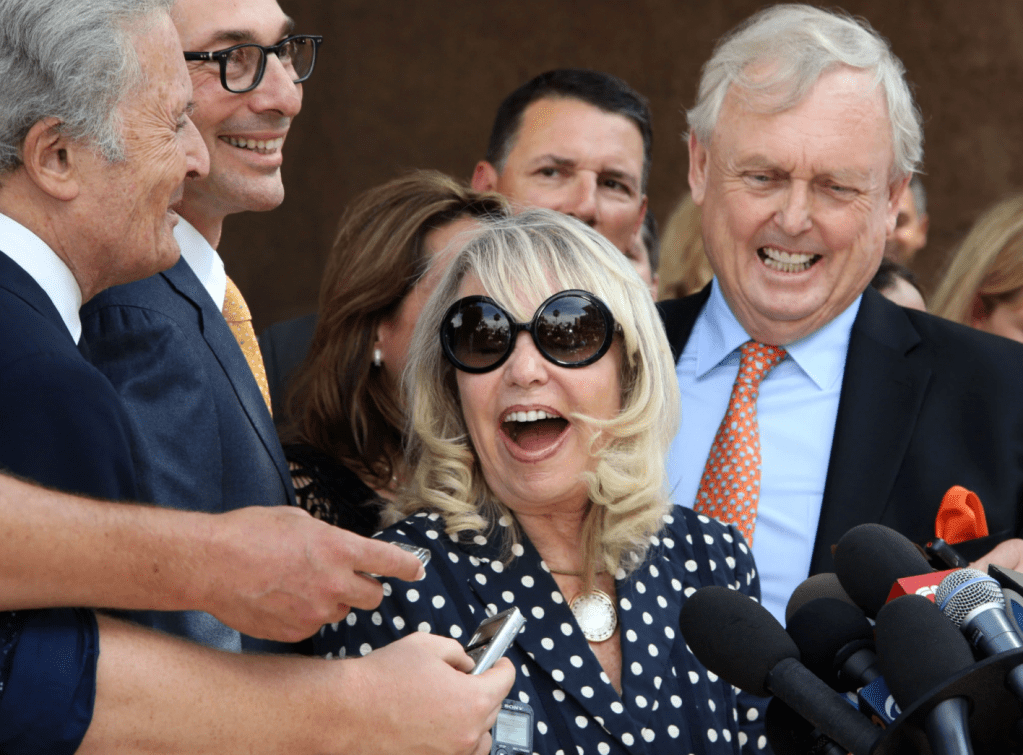
After informing his wife and co-owner, Shelly Sterling, that she could sell the team without his signing off, Donald Sterling abruptly went back on his word, showing signs he would fight any potential sale of the team. On May 27, 2014, Sterling sent a 32-page response to the NBA’s ruling, citing an “illegal punishment”, claiming that a forced sale of his team would require him to pay an “egregious” capital gains tax.
Just two days after Donald Sterling’s response to the NBA, on May 29, 2014, it was announced that the Los Angeles Clippers had been sold to former Microsoft CEO Steve Ballmer for $2 billion, who beat out several other investors in a bidding war. It was reported that Shelly Sterling and Steve Ballmer reached a deal after medical experts had deemed the 80-year old co-owner to be “mentally incapacitated”, which had given full ownership and control over the team to Sterling’s wife in a successful effort to prevent Donald Sterling from blocking any sale of the franchise.
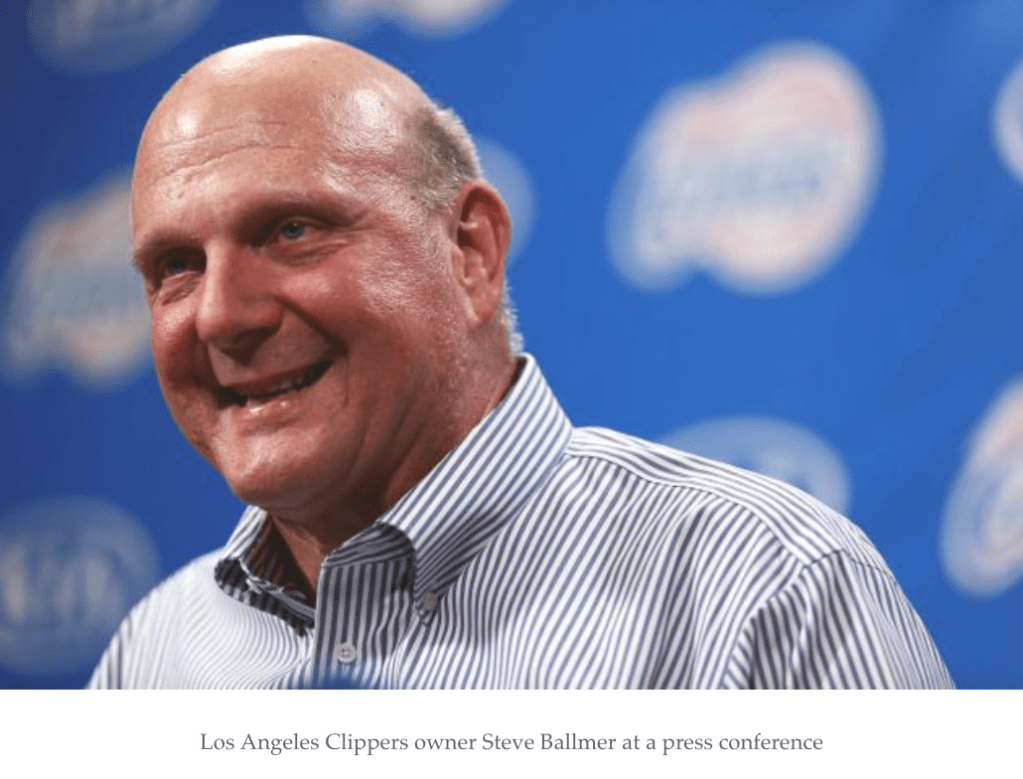
The eccentric, Mark Cuban-like former Microsoft CEO stunned the sports world after purchasing the Los Angeles Clippers for at that time a record $2 billion (Sterling purchased the franchise for only $12.7 million in 1981). Ballmer, who most notably served as Bill Gates’ predecessor, left Microsoft’s Board of Governors after 14 years to focus solely on his newly-purchased franchise.
This wasn’t, however, the first time Ballmer made headlines in terms of NBA ownership. In 2007, when Clay Bennett and the Seattle Supersonics began finalizing preparations to relocate the franchise to Oklahoma City in the midst of legal battles with the city, Ballmer, then Microsoft’s CEO, attempted to purchase the team and keep it in Seattle. No deal or agreement was reached, and the rest is history.
So far, under Ballmer’s leadership, the Clippers have seen immense playoff success, rebuilding years, and now a potentially prosperous future with the addition of All-Stars Kawhi Leonard and Paul George. Ballmer, who is the wealthiest owner of a professional American sport’s franchise, even recently unveiled plans for a new billion-dollar Ingelwood arena, in which the Clippers would finally move out of the Staples Center. It’s safe to say Ballmer’s ownership of the franchise will not be as dramatic or strenuous as his predecessor’s.
With the team sold, his reputation ruined, and receiving overwhelming hatred from his once beloved Los Angeles community, Sterling, thankfully so, seemingly disappeared from the public eye. Still married to Shelly and living off his millions from his successful, lawsuit-ridden career as a real estate mogul and failure as the owner of the Los Angeles Clippers, Sterling is somehow still alive and kicking at the age of 86 while still most likely obtaining, spending on, and discarding many different girlfriends.
In just the matter of a single recorded conversation with one gold-digging mistress, the NBA and sporting world was plunged into seemingly endless chaos, while Donald Sterling sealed his fate and forever imprinted his name into the NBA’s longstanding history. In all the drama that ensued within and around the NBA, one thing is for sure: The Donald Sterling incident was one of the greatest, most infamous scandals in professional sports history. If we’ve learned anything from these events, it is that we all have preconceived notions of various things. Mark Cuban put it best when he said, “None of us have pure thoughts; we all live in glass houses.”
—————————————————————————————————————
- Special thanks to SBNation’s detailed timeline into the Donald Sterling events (https://www.sbnation.com/nba/2014/5/30/5764162/clippers-sale-timeline-donald-sterling-steve-ballmer)
 Logan's Playbook